
Pythagorean Theorem Complete Guide by Pathyacram
“Your journey to a healthy lifestyle begins here.”
What is the Pythagorean Theorem?
In today’s competitive education world, students need the right guidance to understand concepts clearly and score high marks. Pathyacram Online Math Tuition provides a well-structured learning experience that covers fundamental to advanced math topics. With expert tutors and interactive learning methods, Pathyacram helps students master everything from Shares and Dividends to Geometry and Mensuration.
The Pythagorean Theorem states that in a right-angled triangle, (Hypotenuse)² = (Base)² + (Perpendicular)². This powerful relationship helps in solving problems involving lengths, distances, and geometric relations.
The Pythagorean Theorem is a basic principle in geometry that explains the relationship between the three sides of a right-angled triangle. It states that the square of the hypotenuse—the longest side opposite the right angle—is equal to the sum of the squares of the other two sides. Written as a formula, it appears as a² + b² = c². This theorem is widely used in mathematics, construction, physics, engineering, and everyday problem-solving to calculate distances, heights, and measurements accurately.
.
Applications of the Pythagorean Theorem in Different Mathematical Topics
Pythagorean Theorem for Students: Easy Guide
1. Algebra and Pythagorean Theorem
In Algebra, the theorem helps in forming equations, understanding geometric identities, and solving quadratic expressions. Pathyacram integrates algebraic techniques with the theorem to improve analytical skills.
2. Boats and Streams
Problems involving Boats and Streams often require calculating effective speeds. The Pythagorean Theorem is useful when the movement of the boat and water current forms perpendicular components.
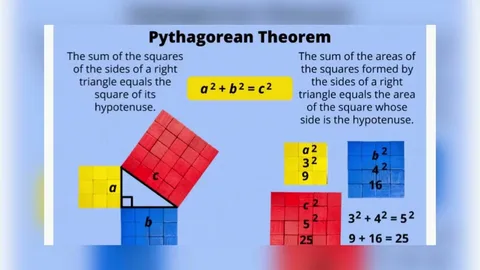
Why Learn Pythagorean Theorem with Pathyacram?
The Pythagorean Theorem is a fundamental rule in geometry used to calculate the sides of a right-angled triangle. It states that the square of the hypotenuse (the longest side) is equal to the sum of the squares of the other two sides.
At Pathyacram, our approach includes:
- Clear visual diagrams
- Practical examples
- Real-life word problems
- Integration with all major math topics
This ensures mastery across boards, competitive exams, and concept-based learning system
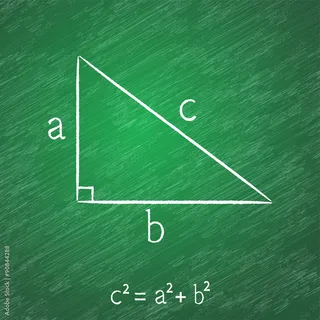




Understanding the Pythagorean Theorem for Easy Learning
Step-by-Step Method to Solve Pythagorean Theorem Problems
Solving Pythagorean Theorem problems becomes very easy when you follow a clear step-by-step method. First, identify the right-angled triangle and label the sides as perpendicular, base, and hypotenuse. Next, apply the Pythagorean formula a² + b² = c², where c is always the hypotenuse, the longest side opposite the right angle.
Quick Tips to Learn the Pythagorean Theorem
Learning the Pythagorean Theorem becomes easier when you remember a few simple tips. Always identify the hypotenuse first, as it is the longest side of the right-angled triangle. Practice using the formula a² + b² = c² with small numbers to build confidence.
Try visual diagrams, real-life examples, and quick triangle checks to strengthen your understanding. Pathyacram helps students master these tips with easy lessons and regular practice activities.
Why the Pythagorean Theorem Is Important in Geometry
The Pythagorean Theorem is important in geometry because it helps us calculate distances, understand shapes, and solve real-life measurement problems. It forms the foundation for working with right-angled triangles and is used in construction, design, navigation, and many advanced math concepts. Pathyacram teaches this theorem in a simple way, helping students apply it confidently in geometry and daily life.
The Pythagorean Theorem is essential in geometry because it helps determine side lengths and distances with accuracy in right-angled triangles. It explains how the sides of a triangle are connected and is frequently used in tasks like finding diagonals, measuring heights, and solving coordinate-based problems.
Frequently Asked Questions
1. What is the Pythagorean Theorem?
Ans The Pythagorean Theorem is a fundamental mathematical formula that applies to right-angled triangles. It states that the square of the hypotenuse (the longest side) is equal to the sum of the squares of the other two sides: a² + b² = c².
2. Why is the Pythagorean Theorem important?
Ans. The Pythagorean Theorem is important because it helps solve real-world problems related to distance, height, and measurement. It forms the foundation of geometry, trigonometry, and even physics concepts involving space and structure.
3. How do I identify the hypotenuse in a triangle?
Ans. The hypotenuse is always the longest side of a right-angled triangle. It lies directly opposite the right angle, making it the side that the Pythagorean Theorem primarily uses as “c” in the formula.
4. Can the Pythagorean Theorem be used in real life?
Ans. Yes, the Pythagorean Theorem is used in many real-life situations such as construction, navigation, engineering, and map reading. Architects use it to measure diagonals in building layouts, while pilots and sailors use it to calculate shortest paths.
5. What are some easy ways to remember the Pythagorean formula?
Ans One easy method is to practice with small numbers like 3, 4, and 5, which form a perfect Pythagorean triple. Visual diagrams also help because seeing the squares on each side reinforces how the formula works.