
Polynomials: A Complete Guide for Students by Pathyacram
“Your journey to a healthy lifestyle begins here.”
Advanced Problem-Solving Chapters
This structured blueprint explains essential math concepts with clarity and real-life relevance. Pathyacram integrates ideas like Thales’ Theorem, Pythagorean Theorem, and Polynomials seamlessly into Geometry, Algebra, and problem-solving topics while keeping keyword density optimized. Each section strengthens conceptual understanding and boosts exam readiness.
This concise blueprint offers a clear and practical approach to core math concepts. Pathyacram connects principles such as Thales’ Theorem, the Pythagorean Theorem, and Polynomials with key areas of Geometry, Algebra, and quantitative reasoning. The structure supports smooth learning, improves conceptual clarity, and enhances preparation for competitive exams.
.
Algebraic Foundations and Concept Building
Strengthening Expressions and Equations
1. Data Interpretation and Logical Structure
Students understand visual math through Pie Chart, Graph, and Table interpretation. These strengthen logical reasoning while supporting algebraic and polynomial-based patterns.
2.Operations and Foundational Computation
This segment covers topics such as Average, Percentage, Profit and Loss, Discount, and Simple Interest. Pathyacram connects these to real-life financial decisions and introduces Shares and Dividends for advanced exam preparation.
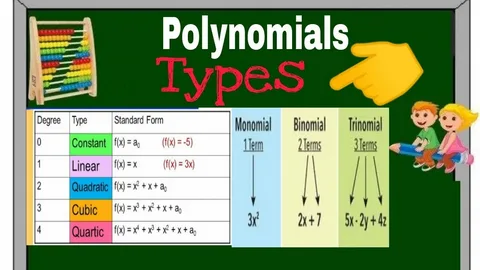
Polynomials Connection to Key Math Topics
Pythagorean Theorem & Thales’ Theorem
Both theorems use algebraic expressions that follow polynomial rules. In the Pythagorean Theorem (a² + b² = c²), polynomial squares help calculate distances, especially in height and distance problems. Thales’ Theorem, which deals with proportionality, also uses algebraic and polynomial relationships.
Time and Work / Time, Distance, and Speed
Although these topics seem unrelated, many equations used to solve them transform into polynomial forms. For example, when combining individual work rates or calculating relative speeds of trains, polynomial expressions help frame the formulas correctly.
Understanding Thales’ Theorem in Geometry
In geometry, proportionality plays a key role, and this is where Thales’ Theorem becomes essential, helping students understand how parallel lines divide transversals into equal ratios. By applying this theorem, learners can easily solve problems related to similar triangles, height and distance, and coordinate geometry. The concept also supports real-life measurement techniques, making it a powerful tool for both academic exams and practical applications in mathematics.
Understanding proportional division helps students connect geometry with real-life applications such as designing structures, scaling diagrams, and solving height–distance problems. This concept also builds a strong foundation for advanced topics like similarity and coordinate geometry, where ratios play an important role. By applying accurate reasoning and visual analysis, learners can simplify even complex geometric questions. Thales’ Theorem fits perfectly into this framework, making it an essential tool for developing strong mathematical skills.



Visual Reasoning and Analytical Development
Logical Connections Through Patterns
This segment builds analytical strength using Graph, Table, Pie Chart, and Number Series. These chapters also reinforce algebraic problem-solving related to Polynomials, enabling deep conceptual clarity.This segment strengthens analytical and logical reasoning by using Graph, Table, Pie Chart, and Number Series to interpret data efficiently. Pathyacram connects these visual tools with algebraic concepts, making it easier for students to identify patterns, compare numerical relationships, and solve multi-step problems.
Understanding 2D and 3D Figures
Two-dimensional and three-dimensional figures form the foundation of Geometry, helping students visualize shapes, surfaces, and structures accurately. Pathyacram explains key 2D figures like triangles, circles, rhombus, parallelogram, and trapezoid alongside 3D shapes such as cube, cuboid, sphere, cone, and cylinder.
Through simple definitions, real-life examples, and formula-based learning, students develop a strong grasp of areas, volumes, and surface measurements. This understanding supports advanced topics and improves overall mathematical reasoning
Building a Strong Math Foundation with Pathyacram
Pathyacram focuses on developing a solid math foundation by simplifying core concepts and showing how they connect across different topics. Students learn to approach problems with confidence through step-by-step explanations, visual understanding, and real-life applications.
Whether it’s strengthening basics in arithmetic, exploring geometric reasoning, practicing algebra, or applying concepts in advanced problem-solving, Pathyacram ensures learners gain clarity, accuracy, and long-term mastery. This structured approach helps students perform better in exams and builds the logical skills needed for higher-level mathematics.
Final Thoughts
Polynomials are more than just algebraic expressions—they are powerful tools that connect multiple mathematical concepts, from Pythagorean Theorem to Permutation and Combination, from Mixture problems to Races and Games. With the right guidance from Pathyacram, learners can master polynomials and apply them to a wide range of real-world and exam-related scenarios. Whether you’re studying through online math tuition or independently, a strong understanding of polynomials will elevate your mathematical skills and help you excel across all major topics.
Frequently Asked Questions
1. How does Pathyacram help students build a strong foundation in mathematics?
Ans Pathyacram simplifies complex mathematical ideas using structured explanations, visual learning, and real-life examples. Students gradually develop clarity in Geometry, Algebra, Arithmetic, and logical reasoning.
2. Why is learning Polynomials important for advanced math topics?
Ans. Polynomials form a core part of Algebra and are essential for solving equations, understanding graphs, and analyzing patterns. They help students transition smoothly into advanced areas like calculus, probability, and number systems.
3. How do topics like Graphs, Tables, and Pie Charts improve problem-solving?
Ans. Graphs, Tables, and Pie Charts develop visual interpretation skills and help students analyze data quickly and accurately. These topics improve logical reasoning, allowing learners to identify patterns, trends, and relationships.
4.What role does Pathyacram play in mastering Geometry concepts?
Ans Pathyacram explains geometric ideas step-by-step with clear diagrams, formulas, and practical comparisons. Concepts like angles, shapes, areas, and volumes become easier to understand through structured explanations.
5. How can students improve speed and accuracy in quantitative aptitude?
Ans Improving speed requires consistent practice of basic arithmetic, smart techniques, and shortcut formulas. Pathyacram introduces students to exam-focused strategies like estimation, elimination, and pattern recognition.